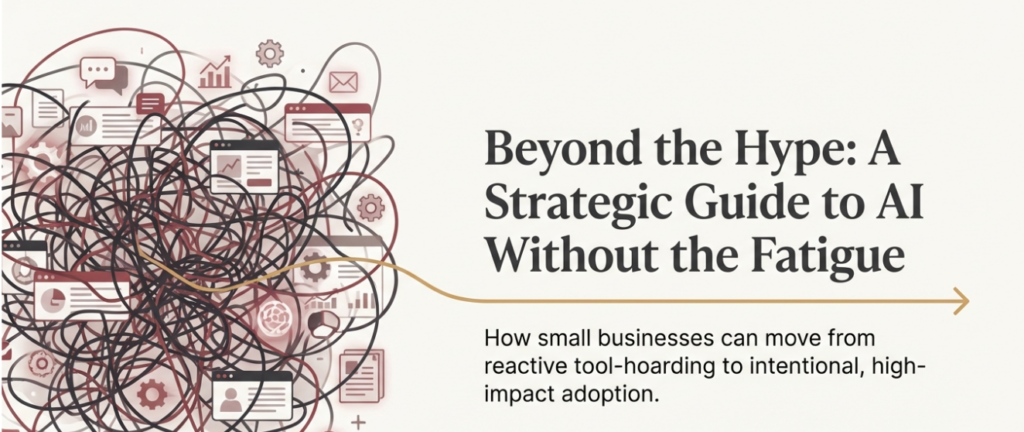
Small businesses are hitting a wall with AI. Not because AI is useless, but because there is too much of it, too fast, with zero breathing room to think. What you get is a strange situation where everything looks “modern” on paper, but daily operations feel heavier, slower, and more confusing than before.
This is AI fatigue. It is not laziness or resistance to change. It is cognitive overload.
Why AI Fatigue in Small Business is happening
First, the sheer volume of tools is insane.
- CRMs
- Chatbots
- Analytics dashboards
- Email automation
- Scheduling assistants
- Content generators.
Most owners did not ask for this many decisions per week. When almost everyone feels overwhelmed by digital tools, the problem is clearly not the people.
Second, expectations never switch off. Notifications follow employees home. Messages demand instant replies. Yet most companies have done nothing to reduce this overload. Tools were added, rules were not.
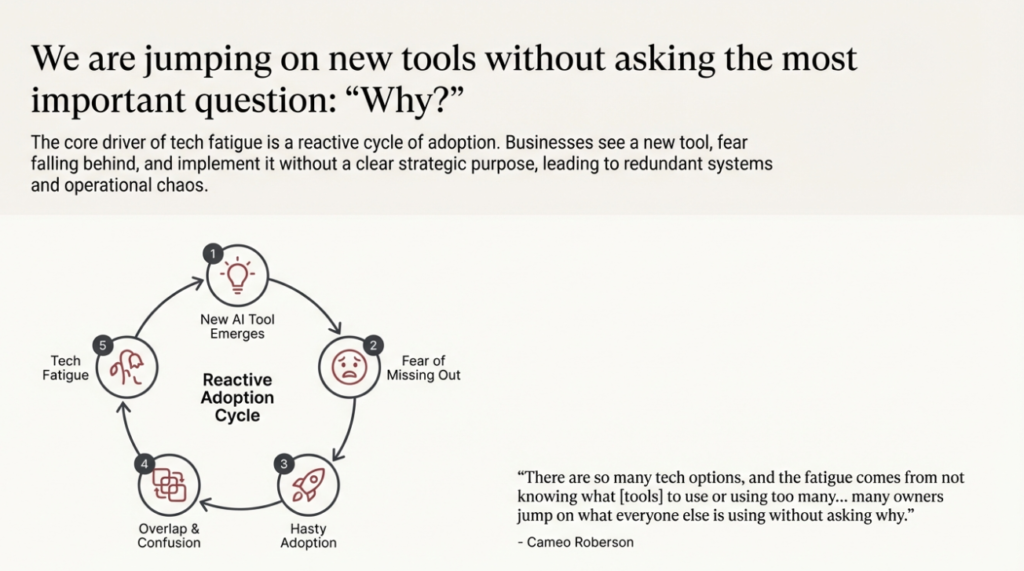
Third, there is a constant fear of falling behind. AI moves fast, and everyone keeps hearing the same threat: adapt or become irrelevant. That pressure alone drains mental energy, especially for founders who already juggle sales, operations, hiring, and cash flow.
For small businesses, this pain is amplified. You do not have time to “explore” tools. You do not have budget to experiment freely. And ROI is often unclear. Many tools promise efficiency but quietly add setup cost, learning cost, and maintenance cost.
AI is both the problem and the solution
Here is the uncomfortable truth. AI can reduce stress or create more of it. Same technology, different outcomes.
Used properly, AI can rebalance workloads, automate boring tasks, and even remind teams to take breaks. Some studies show meaningful reductions in emotional exhaustion when AI is applied with intention.
Used carelessly, AI creates dependency. People stop thinking, systems become brittle, and when something breaks, no one understands how it worked in the first place. Stress increases, not decreases.
The difference is not the tool. It is how and why it was adopted.
What “intentional adoption” actually means
This is where most advice goes wrong, so let’s keep it practical.
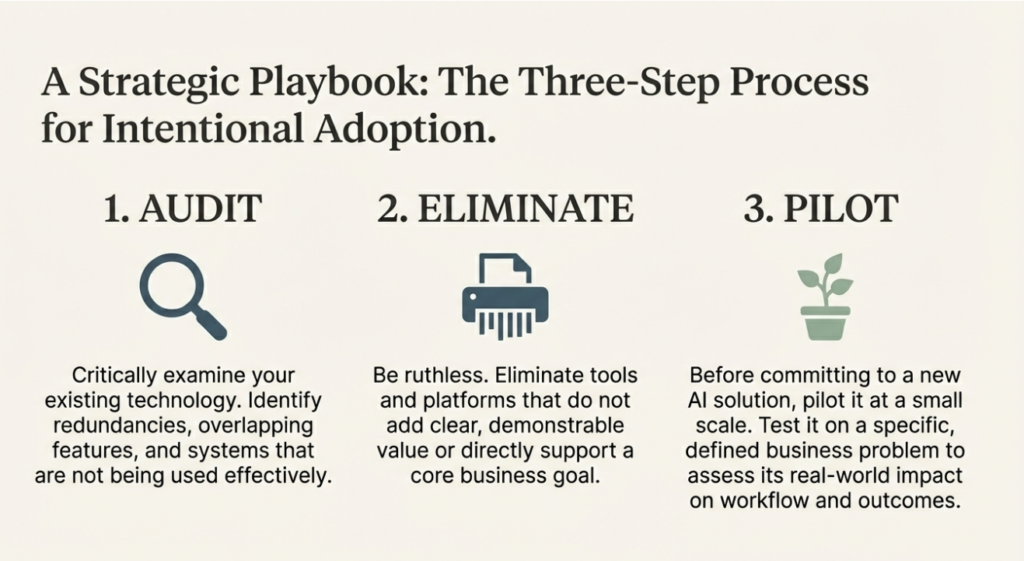
1. Audit before adding anything new.
List every tool you currently use. Be ruthless. If two tools do the same job, one of them is unnecessary. If a tool does not clearly save time, reduce cost, or improve decisions, remove it.
2. Adopt for a reason, not a trend.
Before adding AI, answer one question in plain language: what operational problem does this solve? If the answer sounds vague, you do not need the tool yet.
3. Test small, not company-wide.
Do not replace entire workflows overnight. Run small pilots. Use one team, one process, one month. Measure real impact, not marketing promises.
4. Keep humans in charge.
AI should support thinking, not replace it. Treat it like a smart assistant, not an authority. Final judgment must stay human, especially in customer-facing and strategic decisions.
The real takeaway
Digital wellness for SMEs is not about using more tools. It is about using fewer, better ones. Most businesses do not need the latest AI product. They need clarity, restraint, and systems that make work lighter, not louder.
Adopting AI without a strategy is like filling your kitchen with every new gadget on the market. The counters get crowded, manuals pile up, and cooking becomes harder, not easier. Intentional adoption is choosing a few solid tools that actually help you finish the job.
Not everything new belongs in your workflow. And that is fine.